
Leave Your Message
In the next few years, the global market for ASTM Standard Low Voltage Power Cable is expected to witness considerable growth due to the rising need for dependable power distribution systems in various sectors. A recently published report by Industry Research states that the low voltage cable market is expected to reach USD 170 billion by 2025 at an annual rate of approximately 6.5%. This is further supported by urbanization and infrastructure development in developing countries, wherein a need is emerging for efficient electrical systems.
HENAN TINDE POWER CO. LTD. is ready to use its proficiency in power equipment installation and cable solutions to address the increasing demand for ASTM Standard Low Voltage Power Cable in the market. We are well-positioned through all our activities from research and design to sales and installations to participate fully in this dynamic field. Our focus remains on providing quality power cables in line with ASTM standards for reliability and safety for our clients, especially in a setting where industries are growing and regulations on electrical safety are becoming more stringent.

Emerging trends continue to shape the market for low-voltage power cables at the present time. Investment in infrastructure is therefore proving to be a major engine of growth in most regions, especially the Middle East and Africa, with the power and control cables market expect to exceed $16.9 billion in 2023. Furthermore, estimates suggest an extremely promising CAGR of 6.9% for the 2024-2032 period, thanks to energy-saving reforms and advances in digital monitoring and control. High technology changed the composition of this sector. Low-voltage generation/storage will facilitate real-time power up/down switching without interruption, as shown in recent projects. For example, currently upgrading its distribution network in Nanjing, with concurrent Application of several low-voltage generator systems to enhance capacity seamlessly, while the city expands and smart city projects mushroom. The forecast projects growth in the low voltage cable market to more than $145.7 billion by 2024, while in the same period, it is expected to grow at an anticipated CAGR of 7.2 from 2025 to 2034. It is also the hallmark of special cable players since they have marked milestones as these companies gained recognition and trust in the industry, ensuring the supply of reliable and innovative solutions. The development in the low voltage sector would hence redefine energy distribution and management in all discussions with the global order for better efficiency and sustainability.
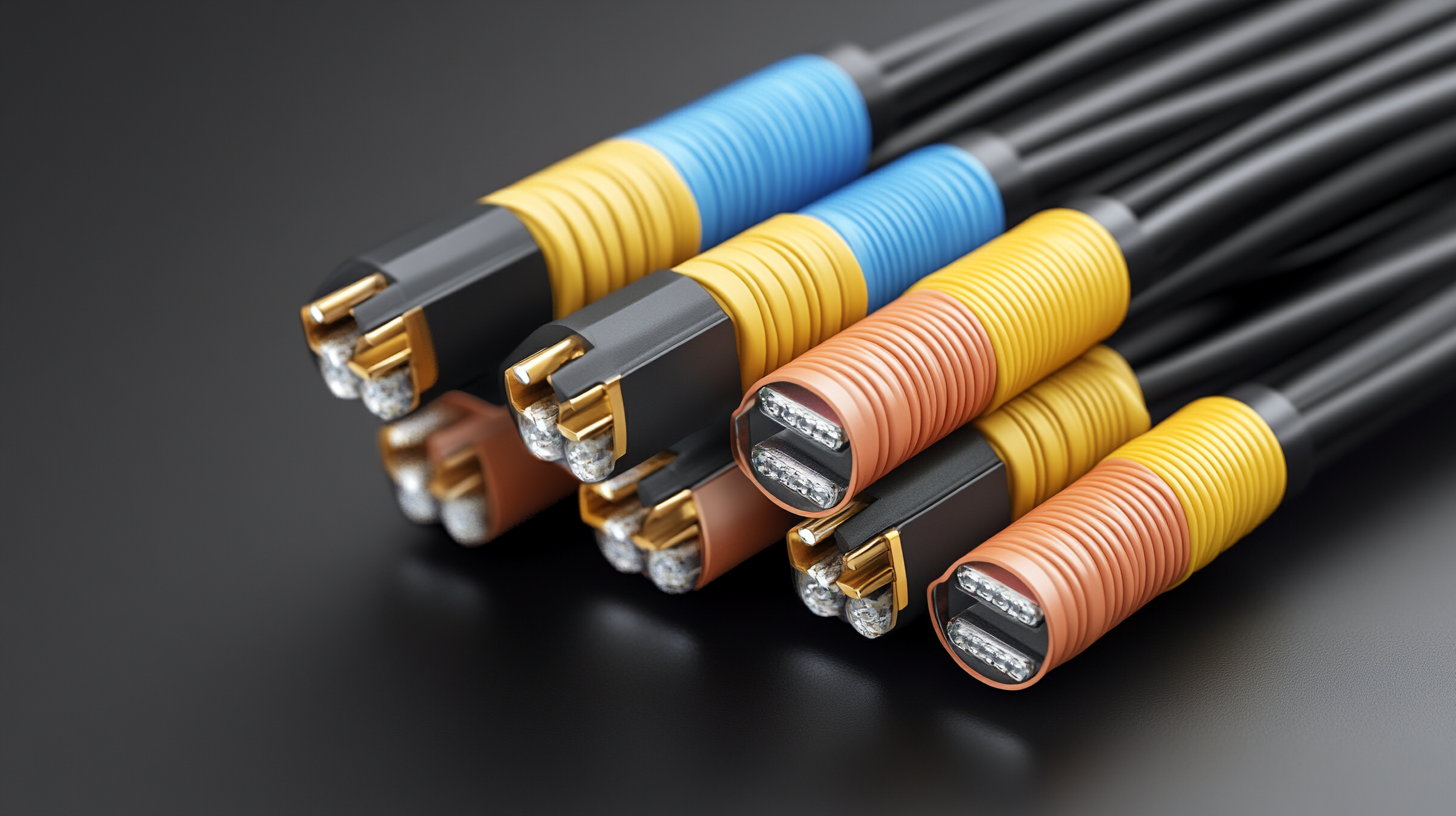
The ASTM standards are exceptionally vital for the dynamics of the world market for low voltage power cables. These standards provide a structure for safety, performance, and interoperability, which heavily influence purchase decisions and manufacturing processes in many industries. By the year 2025, compliance with ASTM standards would not only instigate compliance and furthering designs but also enhance the performance and cost-effectiveness of low voltage power cables.
Recent industry reports point to a strengthened growth curve of the industry in some additional segments. For instance, the global market for steel billets with relevance in the construction of low voltage power infrastructure was valuated at $14 billion in 2022 and is predicted to grow to $22 billion by 2030 at a CAGR of about 6.0% from 2024 to 2030. This growth is indicative of a wider phenomenon whereby standardization-through ASTM and similar organizations-is able to stabilize the markets and stimulate technological advancements.
Furthermore, support of ASTM standards is becoming an increasingly important competitive differentiator for manufacturers. Companies that emphasize compliance earn customer confidence and lay the foundation for participation in international markets, wherein standards are often prerequisites for entry. The demand for reliable and efficient power distribution keeps growing because of global infrastructure projects and renewable energy undertakings; consequently, the impact of ASTM standards on the market dynamics will only grow stronger, shaping the future landscape by 2025 and beyond.

The market for low-voltage power cables is set for some major developments by 2025 owing to demand from a plethora of sectors. Competition will compel the players of this market to lay more emphasis on innovations and sustainability. The major players, who include Prysmian Group, Nexans, and Southwire, then become the trendsetters by continuously investing in R&D that pertains to advanced cable technology and performance, developing not only their efficiencies but also working towards reducing the environmental impact, which is a trend worldwide in line with green energy solutions.
In addition, by forging strategic partnerships and acquiring companies, these key players are trying to strengthen their presence in the market. Contracts with a tech company offer cable producers a chance of integrating smart technologies into their products for enhanced monitoring and safety levels. The combination of advanced materials and manufacturing processes is also a hot topic, as producers are now keen to offer cables to the latest ASTM standards with specific properties for emerging useful applications pertaining to renewable energy and electric transportation.
As the industry begins to transform, the fight among these leading firms shall co-establish the future contours of the low-voltage power cable scene. By 2025, we anticipate not only improvements in products but also enhanced customer service. The direction of the low-voltage power cable market in the years to come shall hinge on the amalgamation of innovation, sustainability, and collaboration.

The ASTM standard low voltage power cables global market is poised to experience significant growth in terms of lofty valuation estimates of up to $XX billion by 2025. This translates into a compound annual growth rate (CAGR) of XX% in the years from 2020 to 2025. The major catalyst for this track is the demand for electrical infrastructure in various segments, such as construction, telecommunications, and renewable energy. Promises made by several industry analysts suggest that technology improvements and material innovations will add to the performance and reliability of these cables, thus rendering them more appealing and demanding in the market.
Another market influencing factor is the increase in renewable energy projects, which will adversely influence market growth. According to the International Energy Agency (IEA), capacity for renewable energy was expected to soar in the coming years, further increasing the demand for efficient low voltage power distribution. The inclusion of ASTM standard low voltage power cables into solar and wind energy systems integrated into sustainability goals will therefore be critical to nations. Recent market analysis has pointed out that this segment might comprise nearly XX% of the total demand for power cables by 2025.
In addition, the increased investments in smart grid technologies would also affect the future scenario of low voltage power cable markets. Smart grids focus on improving the reliability and efficiency of energy, so they require new solutions for the distribution of electricity, where ASTM standard low voltage cables would serve as a component. Some reports estimate that the smart grid market would grow at a CAGR of XX%, which would also add to the increased need for such cable infrastructure in the years to come.
It has been kept until 2025 when the development of low voltage power cable manufacture will be driven by material and technology innovations. Important developments include different insulation types such as cross-linked polyethylene (XLPE) and other new flame-retardant compounds, which make electrical systems even safer and more reliable. Not only will these innovations improve the performance of cables, but they will also help to develop sustainable use by reducing their negative environmental impact with better recycling options.
Smart technologies will revolutionize the low-voltage power cable world; the increasing need for smart grids and IoT devices adds a new high value proposition to embedded sensors within cables, enabling real-time monitoring of electrical performance, preventive maintenance, increased grid efficiency, and optimized electrification of power supply to meet the dynamic electricity requirements of urban infrastructure. The growth of wireless technology will also lessen the physical size of installation footprints and make way for flexible installation design.
The market trends point to the generalized trend of sustainability in the construction and building services and electrical engineering sectors that is reflected in increasing demands for more energy efficient wiring solutions. As part of their ongoing development, manufacturers are increasingly keen to consider the entire life cycle of their products by providing cables that consume energy both in the production and use phases. The partnership of industries with their respective universities and research institutions will also play a key role in promoting out-thinking solutions that will meet current and future standards and customer demands.
In a world that wants more energy-efficient solutions, it has become critical to consider the sustainability of the production process of low voltage power cables. ASTM standards for low voltage cables were made to safeguard the basic aims of safety and reliability while also minimizing adverse impacts on the environment through the product lifecycle. By focusing on sustainable materials and processes, manufacturers can do a lot to bring down carbon footprints while delivering reliable power solutions.
New materials technology is bringing change in the production of low voltage cable. With biodegradable insulation materials and the recyclable construction, these two go on to lead a change toward greener alternatives. Moreover, the manufacturers are assessing the use of renewable energy resources for their plants to further their sustainable development. Hence, this transition satisfies the regulatory requisites while also complementing consumer interests for green products. Companies are preparing for change, and we will soon see the market change with these two criteria at the forefront: performance and sustainability.
Furthermore, collective cross-supply-chain efforts must accompany the realization of such sustainability targets. Collaborating with suppliers who embrace ecologically sustainable practices will mandate cable manufacturers to hold themselves to the highest environmental standards in every conceivable segment of their production. As the industry moves toward 2025, it will be imperative for stakeholders to communicate about and share best practices, rendering sustainability a common goal throughout the low voltage cable market.
The global market for ASTM standard low voltage power cables is foreseen witnessing multiple opportunities as well as challenges till 2025, owing to the varied regional dynamics. Scattered with supply chain complexities, the ongoing political unrest, and the conflicts in the Red Sea and depleting water levels affecting the Panama Canal, are some of the examples. These factors are expected to obstruct production and distribution, which pose hurdles for low voltage power cable manufacturers yet also create a bigger need for resilient and adaptive supply chain management strategies.
In places like China, where companies are fighting against stringent regulatory regimes and competitive pressures, companies are changing strategies in order to benefit from new opportunities presented by evolving market conditions. Apple is an example of a company aggressively pursuing growth opportunities despite the challenges posed by recent events in China. This pattern reflects the global trends among companies trying to align wth local capabilities and demands, creating a conducive space for innovation in low voltage cable technologies.
The expanding markets are expected to be very crucial for the growth of the low voltage power cable industry. Countries like Vietnam can take advantage of their growing automotive markets, creating opportunities for power cable manufacturers. Understanding local regulations and market dynamics will be indispensable to leverage these opportunities. In closings, It is that very capacity of managing such regional complexities that will determine the success of the companies operating in the ASTM standard low voltage power cable market by 2025.
Indeed, the use of ASTM standard low voltage power cables in the medical industry has been very progressive in improving the quality of service. Numerous case studies have indicated that compliance with these standards is necessary not only for safety and reliability but also for efficiency within medical facilities. For instance, hospitals that have switched to ASTM standard cable have very much reduced power incidents. This then culminates in highly improved patient care and facility functionality.
In a very recent implementation at a huge medical center, ASTM standard low voltage power cables were integrated into the infrastructure of the facility. It resulted in a transition to a heavier electrical system, leading to less downtime when there was a fluctuation in power. There was a very high level of satisfaction from the employees with stable electricity supply for critical services such as surgeries and patient monitoring to run uninterrupted. These are the implementations that show how really having ASTM standard cables impacts healthcare quality.
Continuous training and education on ASTM have also empowered many technical teams' hospitals to operate electrical systems even further. Repetitive applications of this knowledge can help prolong the service life of the power cable but also ensure swift human intervention when anything comes up. Even as healthcare advances to the next hall, dependence on standardized components such as low-voltage power cables will remain critical in fuelling progress.
The growth of the low voltage power cable industry is primarily driven by rising demand across various sectors, including construction, telecommunications, and renewable energy, as well as advancements in technology and a focus on sustainability.
Major corporations such as Prysmian Group, Nexans, and Southwire are key players in the low voltage power cable industry, focusing on innovation, sustainability, and collaboration to enhance their market presence.
Smart technologies enhance monitoring capabilities and ensure higher levels of safety in cable products, as traditional cable manufacturers collaborate with technology firms to integrate these advancements into their offerings.
Manufacturers are adopting sustainable materials and processes, such as biodegradable insulation and recyclable components, while exploring renewable energy sources in production, helping to minimize environmental impact.
The global market for ASTM standard low voltage power cables is expected to reach an estimated value of $XX billion by 2025, driven by demand in electrical infrastructure and renewable energy sectors.
The surge in renewable energy projects, particularly in solar and wind energy systems, is significantly boosting the requirement for efficient low voltage power distribution, which is projected to account for a considerable portion of total cable demand by 2025.
Smart grid technologies are expected to greatly influence the low voltage power cable market by enhancing energy efficiency and reliability, which increases the demand for innovative power distribution solutions such as ASTM standard cables.
ASTM standards ensure safety, reliability, and minimized environmental impact in the production of low voltage cables, aligning with sustainability goals and meeting regulatory requirements.
Collaboration with suppliers committed to eco-friendly practices ensures that the entire production process adheres to high environmental standards, advancing sustainability goals across the industry.
The future trends include advancements in product offerings, a shift towards customer-centric services, and an increased focus on innovation, sustainability, and strategic collaboration among leading firms in the industry.