You know, in the fast-changing world of telecom, getting the most out of Single Mode Optical Fiber is really crucial if you want your network to perform well and run smoothly. I read in the latest report from the International Telecommunication Union (ITU) that these fibers cut down on signal loss quite a bit compared to multimode ones — we're talking about just around 0.2 dB per km. That’s a pretty big deal because it makes them perfect for long-distance links and handling lots of data at once, which is pretty much what we need now with everyone demanding more bandwidth. Oh, and by the way, a company like HENAN TINDE POWER CO., LTD., which is pretty big in the power equipment game, totally gets how important it is to come up with smart strategies to really unlock the potential of Single Mode Optical Fiber in networks. They’re all about using advanced install techniques and solid design plans. Basically, if businesses put their focus there, they can get more reliable and high-performing communication systems — it’s a win-win all around.

Best Practices for Installing Single Mode Optical Fiber in Network Environments
When you're installing single mode optical fiber in a network setup, following best practices really makes a difference in how well everything works. For starters, managing the cables properly is super important. Did you know that the Telecommunications Industry Association (TIA) says that up to 70% of network issues can actually come down to messy or poorly organized cables? So, using cable trays, guides, and labels isn’t just about keeping things tidy—it actually helps prevent damage and makes maintenance way easier. Oh, and don’t forget about bending the cables too tightly—going beyond what the manufacturer recommends can cause signal loss and mess up your system’s performance.
Another thing to keep in mind is the environment. The Fiber Optic Association (FOA) points out that temperature swings and moisture can mess with the reliability of those delicate fibers. Installing your single mode fibers in a climate-controlled space can really help protect your gear and make everything last longer. Also, investing in good quality connectors and proper splicing techniques is a smart move—they can really cut down on insertion losses, which hover around 0.3 dB for single mode links. By sticking to these tips, network folks like you can ensure your fiber optic setup delivers top-notch performance and stays reliable, even under tough conditions.
Performance Optimization of Single Mode Optical Fiber
This chart displays the performance metrics for single mode optical fiber installations in various network environments, focusing on parameters such as Signal Loss, Throughput, and Latency.
Key Factors Influencing Single Mode Fiber Performance and Reliability
Single mode optical fiber, or SMF for short, is pretty much the backbone of high-speed data transfer these days. It’s amazing how much its performance depends on a few critical factors, you know? One biggie is the stuff called the refractive index profile — that has to be finely tuned to cut down on modal dispersion and keep the signal crystal clear. Plenty of studies have shown that keeping the core diameter uniform and choosing the right numerical aperture can really boost how efficiently data travels through these fibers. That’s especially crucial for setups like data centers or telecom networks where every bit of performance counts.
But it’s not all just design — the environment matters too. Recent research points out that temperature fluctuations can mess with the fiber’s attenuation, meaning more signal loss. So, fibers built to handle temperature swings often still suffer a drop in performance when the weather gets really extreme. And when we look at market trends, it’s clear that the demand for top-tier optical fibers is expected to grow at a pretty healthy rate — around 8.5% annually from 2024 to 2033. That just shows how much we rely on solid data transmission tech as the world keeps getting more connected.
Getting a good grip on these factors is key if we want to keep fiber optic networks running smoothly in the future, all while keeping energy use in check. It’s a balancing act, but one worth mastering for sure.
Advanced Technologies for Enhancing Single Mode Fiber Efficiency
Hey, you know, with all the recent tech advances, it's really exciting how much progress we've made in boosting the performance of single-mode optical fibers — which are pretty much the backbone of making our networks run smoother. One of the coolest breakthroughs lately has gotta be vertical cavity surface emitting lasers, or VCSELs for short. These little devices are totally changing the game in integrated photonics by offering lightning-fast connectivity. That’s a big deal, especially for powerful stuff like generative AI. What’s awesome is that VCSELs can handle data transfer over long distances pretty efficiently, which helps meet the increasing bandwidth needs that high-tech networks demand nowadays.
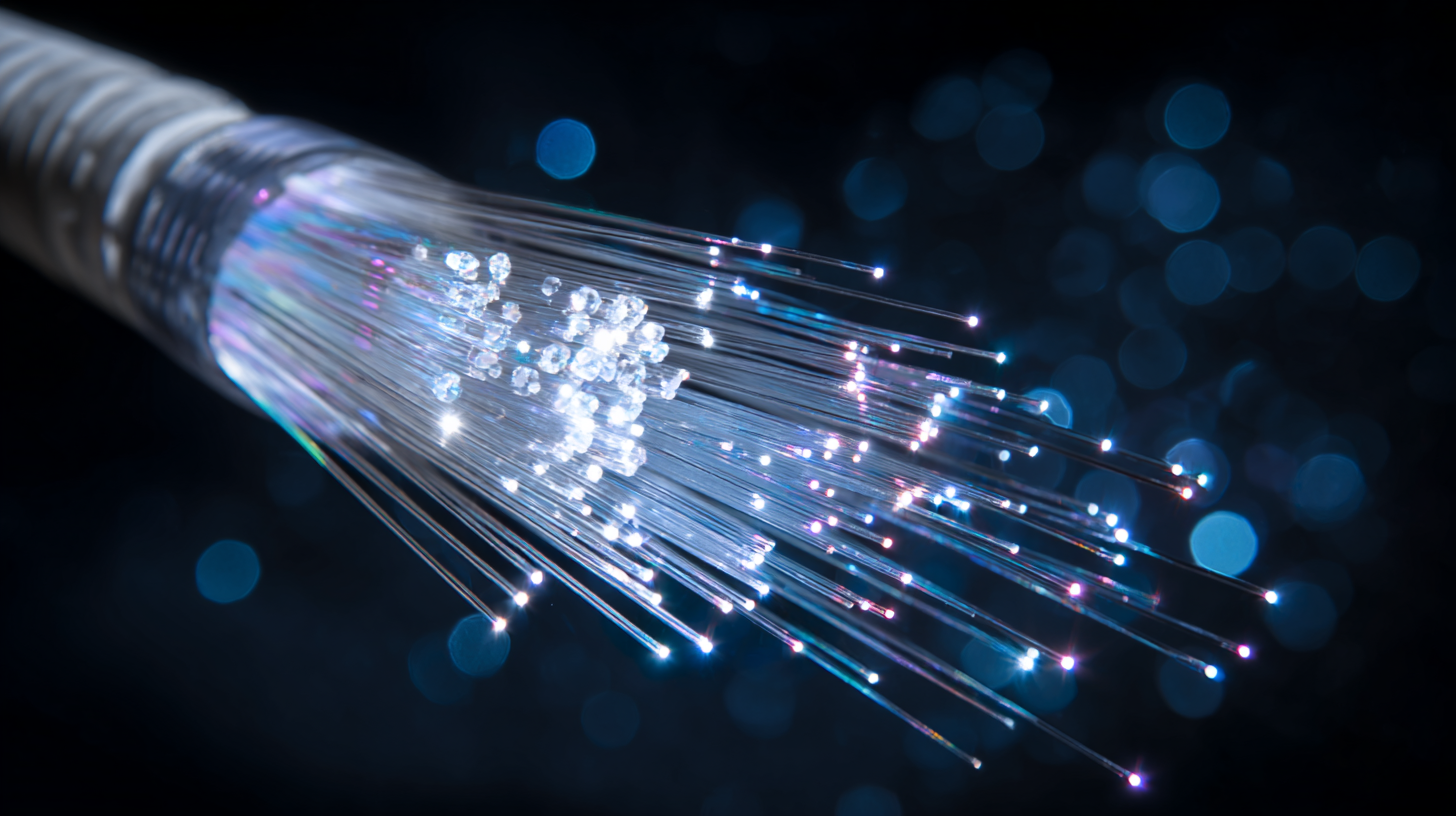
And get this — there’s also this tech called hollow core fiber (HCF), which is a total game-changer. It’s designed to push the boundaries even further by not only tackling those heavy AI workloads but also seriously improving global latency and overall connectivity. As optical fiber technology keeps evolving, making use of these kinds of innovative methods is going to be crucial for unlocking the full potential of single-mode fibers. The whole industry is moving fast, and it’s exciting to think about how these improvements could shape our future communication systems — they’re expected to be worth around $6.8 billion by 2029, after all. All in all, it’s a really fascinating time for fiber optics, and I can’t wait to see what’s next!
Troubleshooting Common Issues in Single Mode Optical Fiber Networks
When it comes to optimizing single-mode optical fiber networks, troubleshooting the usual issues is pretty much essential if you want things to run smoothly and reliably. One common headache is signal attenuation. This can happen if the fiber gets bent too sharply or if connections aren't set up quite right. So, it’s a good idea to regularly check out the physical setup—making sure the cables aren’t bent beyond their recommended limits can really help prevent signal loss. Also, investing in high-quality connectors and proper splicing techniques makes a big difference—less signal loss means the network stays up and running without a hitch.
On top of that, external interference can sometimes mess with data transmission. That’s why it’s super important to take a look at the environment where the fibers are laid out. If you’re dealing with heavy electromagnetic interference from nearby power lines or industrial gear, using shielded cables might be the way to go. And by the way, companies like HENAN TINDE POWER CO., LTD. are pretty good at designing and installing power setups that include these kinds of solutions, helping your networks stay solid against outside factors. Regular check-ups and upgrading components when needed can also give your system an extra boost, keeping issues at bay and ensuring everything stays reliable in the long run.
Integrating Single Mode Fiber with Existing Networking Infrastructure
Switching to single mode optical fiber (SMF) can really give your network a boost, especially in terms of performance and bandwidth. According to a report from the Optical Fiber Communication Conference, SMF can handle data speeds of up to 100 Gbps over more than 100 kilometers — pretty impressive, right? That’s why they’re such a popular pick for bigger, longer-distance setups like citywide networks or long-haul links. The secret sauce here is the low modal dispersion in SMF, which helps keep signals clear and strong over those lengthy distances.
Now, if you’re thinking about adding SMF to your existing setup, there are a few things to keep in mind. First off, you’ll want to check if your current transceivers and hardware are compatible. Some older systems still run on multimode fiber, which might mean you’ll need some extra adapters or upgrades. A good move is to do a thorough inventory of what you already have—that way, you can spot the best spots where SMF integration makes sense without messing up your current performance.
Also, pay attention to your infrastructure. Proper installation and regular maintenance are key to avoiding issues like signal loss from bending fibers or poor splicing. It’s usually worth bringing in technicians who really know their stuff when it comes to SMF—they can make a big difference in ensuring everything’s set up just right. And don’t forget to keep an eye on your network’s performance over time. Regular monitoring can help catch problems early before they turn into bigger headaches. Following these tips will likely give you better data speeds, improved reliability, and help you get the most out of your single mode fiber upgrade — making your network faster and more solid overall.
Future Trends in Single Mode Optical Fiber Technology and Applications
With more and more folks needing lightning-fast data transfer, it’s pretty clear just how important it is to keep optimizing single mode optical fiber performance. Looking ahead, the future of this tech is super exciting—new materials and smarter fiber designs are gonna boost bandwidth, cut down on signal loss, and make networks run smoother than ever. These breakthroughs are set to change the game, especially when it comes to sending data over long distances. Think stronger fibers that can handle environmental bumps and bends better, all while minimizing those pesky signal drops.
Here at HENAN TINDE POWER CO., LTD., we’re all about staying ahead of the curve. As a company that installs power equipment and cable accessories, we totally get how vital upgraded optical fiber is for today’s networks. We’re investing heavily in research and development to give our clients the latest and greatest solutions. The goal? Better network speeds, more reliability, and solutions that last. It’s pretty cool to be working right at the intersection of cutting-edge tech and expert service, putting us right at the forefront of the evolving optical communication scene.
Exploring the Essential Role of Industrial Rubber Products in Fiber Optic Cable Protection
Industrial rubber products play a crucial role in the protection of fiber optic cables, ensuring durability and reliability in various environments. One of the standout features of these rubber products is their waterproof capability, which effectively safeguards against water and moisture infiltration. This anti-permeability characteristic is essential, as even minor water exposure can severely impact the performance of fiber optic cables, potentially leading to costly downtime and repairs.
In addition to being waterproof, these industrial rubber materials exhibit excellent fire resistance properties. With low heat conduction factors, they help mitigate the risk of fire hazards in environments where electrical systems operate. The moderate hardness of the rubber not only enriches its flexibility but also ensures it can withstand physical stress without compromising the integrity of the fiber optic cables it protects. Furthermore, safety is paramount; our products are made from environmentally protective materials that do not pose any health risks to users, aligning with contemporary sustainability standards.
Cost-effectiveness is another significant advantage offered by our industrial rubber products. By incorporating advanced production equipment and cutting-edge technology, we are able to manufacture efficient and affordable solutions without sacrificing quality. This blend of performance, safety, and affordability makes our industrial rubber products an essential choice for those looking to secure their fiber optic cables effectively.
FAQS
: Proper cable management is crucial as it can prevent damage and facilitate maintenance. According to the Telecommunications Industry Association (TIA), up to 70% of network issues stem from poor cable organization.
Maintaining proper bend radii is essential since exceeding the manufacturer's specifications can lead to signal loss and decreased system performance.
Environmental control helps protect fiber optic cables from temperature fluctuations and moisture, which can affect their reliability and longevity.
Utilizing high-quality connectors and advanced splicing techniques is recommended to minimize insertion loss, which typically averages around 0.3 dB for single mode connections.
VCSELs are innovative devices that provide high-speed connectivity and efficient data transfer over long distances, making them critical for applications such as generative AI computing and enhancing the performance of single mode fibers.
HCF meets the heavy computational needs of AI workloads and improves global latency and connectivity, thus optimizing fiber efficiency.
Future innovations are expected to enhance bandwidth capabilities, reduce signal degradation, and improve overall network efficiency through advanced materials and better fiber designs.
HENAN TINDE POWER CO., LTD. invests in research and design to provide cutting-edge solutions that optimize network performance and ensure reliability and sustainability in operations.
The fiber optics industry is projected to be worth $6.8 billion by 2029, indicating significant growth and demand for optical communication solutions.